In today’s dynamic Middle East business landscape, organisations striving to expand must adopt integrated systems that support growth without sacrificing control. A robust human resource management information system becomes essential when paired with cloud-based payroll capabilities, enabling human resource teams and payroll functions to operate as one. By embedding payroll into the human resource management ecosystem, enterprises unlock scalable HR solutions, streamline operations, and build a foundation for enterprise HR integration that supports both current demands and future growth.
In today’s fast-growing Middle East business environment, organisations need systems that help them grow while staying in control. A strong human resource management information system, combined with cloud-based payroll, helps HR and payroll teams work together as one. When payroll is part of the HR system, organisations can scale easily, reduce manual work, and manage people more efficiently. This creates a solid foundation that supports today’s business needs and future growth across the region
What Challenges Do Enterprises Face When Scaling HR and Payroll in the Middle East?
As companies in the Gulf and broader Middle East region grow, the scope of human resources services evolves. HR teams must manage recruiting, onboarding, performance tracking, attendance, benefits, and payroll across markets. According to a survey, 85 % of over 1,500 Middle East employees say they understand their organisation’s goals, signalling an appetite for change and transformation.
For a truly effective ecosystem, enterprises need a human resource management information system that integrates with cloud payroll systems and enables enterprise HR integration. This combination delivers scalable HR solutions for evolving organisations.
How Payroll and HR Integration Improves Operational Efficiency and Compliance
Linking payroll with HR technology creates value across operational, strategic, and compliance dimensions.
Operational efficiency and data integrity
When a human resource management information system integrates directly with payroll workflows, data duplication, including employee master data, time and attendance records, benefits, and termination records, is minimized. A regional study found that automation of HR-centric tasks in the Middle East enhances time management and employee engagement.
Compliance and localization readiness
In Middle East markets, statutory frameworks such as the UAE’s Wage Protection System (WPS) and Saudi Arabia’s end-of-service gratuity mandates introduce complexity. A unified ecosystem—where the human resource management system is tightly integrated with cloud payroll systems—ensures that changes in HR automatically trigger accurate payroll calculations and compliance filings.
Scalability for growth and change
Enterprises looking for scalable HR solutions need to ensure their systems can handle rapid changes—from new markets, large head-count increases, or restructuring—without requiring manual re-engineering. Enterprise HR integration across HR and payroll means that those changes become manageable. Cloud-based payroll systems support scaling by enabling flexible employee addition, adjusting pay structures, and accommodating locations via secure online platforms.
Strategic insights and workforce agility
With payroll data and HR data unified in a human resource management information system, decision-makers gain visibility into workforce costs, turnover trends, productivity, and operational leverage.
Best Practices for Implementing Payroll and HR Integration in the Middle East
To ensure success when adopting integrated HRTech and payroll systems in the Middle East, enterprises should follow these guidelines:
For a smoother and more successful adoption of integrated HRTech and payroll systems in the Middle East, enterprises may find it valuable to consider the following guidelines
Select a cloud-native platform tailored for regional nuances
A human resource management information system that supports multiple currencies, features bilingual interfaces (Arabic/English), and aligns with local labour regulations ensures the smoother deployment of cloud payroll systems. Evidence from regional studies indicates that cloud-based HR software supports faster onboarding and improved employee self-service in GCC markets.
Design for modular scalability and integration
Prioritise a human resource management information system that supports modular growth of payroll components, new employee types, and additional countries without heavy customisation. Then ensure enterprise HR integration via APIs or connectors that link HR, payroll, benefits, and attendance systems.
Govern data, change, and cross-functional workflows
As companies grow, the volume of data (employee records, visa/permit status, benefits, payroll), and cross-team dependencies increase. Implement strong governance within your human resource management ecosystem and the associated human resources services teams. Align changes in HR policies with payroll workflows to ensure accurate calculations and compliance.
Benchmark scalability and user-experience metrics
Measure the effectiveness of your scalable HR solutions—track metrics such as time per pay-run, error correction rate, cost per headcount, time to integrate a new country payroll. A unified HR and payroll ecosystem should show improvements in these metrics as organisations scale.
How Payroll and HR Integration Aligns With Enterprise Growth Strategies
In the Middle East, where national agendas emphasize digital transformation and workforce diversification, organizations must look beyond processes and focus on people-centered outcomes. Deploying a human resource management information system integrated with cloud payroll systems enables human resources services teams to shift from transaction-oriented to a strategic partnership. This alignment supports talent mobility, workforce agility, and growth at speed—critical in volatile growth markets.
Indeed, enterprises leveraging enterprise HR integration through scalable HR solutions position themselves to respond swiftly to market changes, regulatory shifts, and evolving workforce dynamics. They build resilience, adaptability, and competitive advantage.
Conclusion: Why Payroll and HR Integration Is Essential for Scalable Growth in the Middle East
For growing enterprises in the Middle East, the combination of a modern human resource management information system, tightly integrated with cloud payroll systems, and delivered via scalable HR solutions, enables powerful enterprise HR integration.
Ready to scale your human resource management and payroll operations with a region-optimized, cloud-native platform? Visit our Payroll & HR Solutions page on Ramco Systems to explore how our integrated solutions support growth, compliance, and workforce agility across the Middle East.
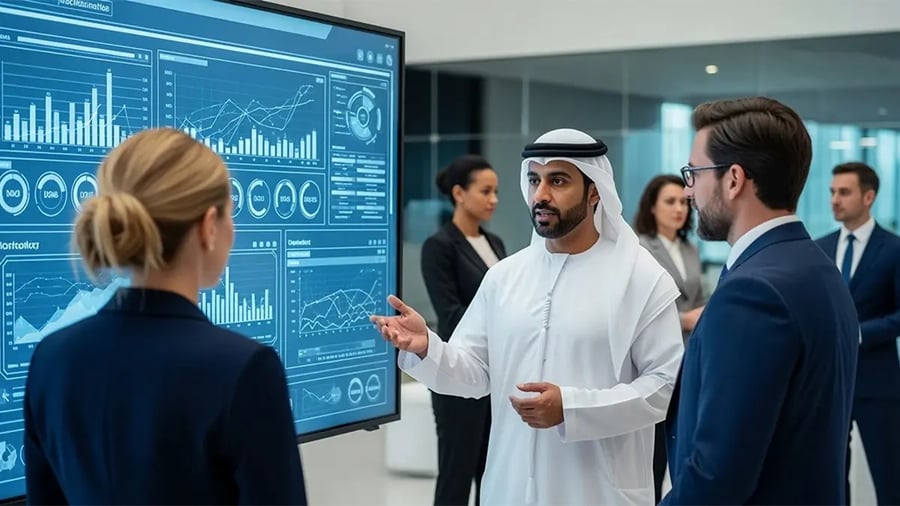

 How does integrating payroll with a human resource management information system support business growth?