| Key Takeaways: |
- Payroll analytics transforms global payroll from a transactional function into a strategic business capability by improving workforce planning, financial management, payroll visibility, and employee experience.
- Real-time payroll analytics, dashboards, and predictive modelling enable organisations to monitor payroll performance, forecast workforce costs, and make faster, data-driven decisions.
- HR analytics integration with payroll software helps optimise payroll processes, reduce costs, improve productivity, and strengthen payroll compliance across multiple countries.
- Payroll benchmarking, machine learning, and advanced reporting enable organisations to identify inefficiencies, reduce errors, improve compliance, and continuously optimise payroll operations.
- Modern payroll analytics solutions provide actionable insights that help organisations improve payroll accuracy, support strategic planning, and build scalable global payroll operations.
|
Payroll management has evolved significantly with the integration of analytics. Previously focused on ensuring accurate and timely employee payments, payroll is now a strategic business tool.
Data analytics enables deeper insights into employee compensation, productivity, and financial management, transforming global payroll from a routine task into a critical component of strategic business planning. This transformation empowers companies to make informed decisions, optimize operations, and enhance overall business performance while improving employee experience. In a multi-country payroll scenario, operational teams typically struggle with global reporting and analysis across countries, entities, and locations. Payroll reporting and analytics have become increasingly important owing to compliance issues associated with aspects of on costs, provisions for leave accruals, workers’ compensation, and payroll taxes.
The Impact of Real-time Analytics on Payroll Solutions
The impact of real-time analytics on payroll decision-making is transformative, offering a significant leap in operational agility and strategic foresight. Tools like BInGO provide immediate access to data, enabling payroll managers to make quick, informed decisions.
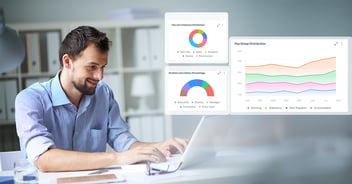
Real-time analytics illuminate trends and anomalies as they happen, facilitating proactive management and strategic adjustments. The introduction of a payroll dashboard amplifies these benefits by centralizing key financial and employee metrics in an intuitive, visual interface. With this payroll dashboard, managers can easily monitor payroll accuracy, track employee hours, oversee leave balances, and analyze employee compensations in real-time. Thus, integrating a payroll dashboard with real-time analytics frameworks is a cornerstone of modern payroll management strategies, providing the critical insights required for agile decision-making.
Leveraging Data for Global Payroll Process Optimization
Leveraging data for payroll process optimization is a strategic approach that taps into the power of data analytics to enhance efficiency and reduce costs. Through payroll data analysis, companies can pinpoint inefficiencies and overspending patterns, and uncover opportunities for streamlining operations. This data driven methodology allows businesses to make informed decisions, optimizing payroll processes for greater accuracy and cost-effectiveness across an enterprise payroll system. It not only minimizes errors and compliance risks but also enables a more agile payroll software that can adapt to changing regulations and workforce dynamics.
Furthermore, incorporating HR analytics into payroll offers profound insights into workforce management, directly influencing payroll efficiency. By analyzing trends in employee performance, turnover, and engagement, businesses can make data-driven decisions that not only streamline payroll operations but also enhance workforce satisfaction and productivity.
Addressing the Hurdles in Global Payroll Reporting
Traditionally, generating payroll reports was a time-consuming and error-prone process often hampered by manual data entry and complex calculations. However, technological advancements revolutionized this process, making it faster and more reliable. Automated tools and software, such as Payce, streamline data collection and analysis, providing accurate reports with minimal effort. These innovations not only save time but also provide deeper insights into payroll data, enabling better strategic planning and operational improvements for organizations using global payroll software.
The Role of Predictive Modeling in Financial Planning
Predictive modeling has become a pivotal tool in forecasting workforce costs, fundamentally changing how companies approach financial planning.
By leveraging predictive payroll analytics, organizations can anticipate workforce expenses with remarkable accuracy, allowing for a more strategic allocation of resources. This forward looking approach enhances budgetary precision and allows businesses to swiftly adapt to evolving market conditions and labor demand.
Predictive modeling serves as a bridge between historical data and future financial performance, enabling companies to identify trends, assess risks, and seize opportunities. This approach transforms financial planning from reactive to proactive, optimizing operations and driving sustainable business growth through effective payroll cost management.
Bench-marking Payroll Performance Against Industry Standards
Bench-marking payroll performance against industry standards is crucial for enhancing operational efficiency and maintaining competitiveness. By measuring payroll metrics against established benchmarks, companies can identify areas of improvement and strategize on how to optimize their processes. This comparative analysis enables organizations to understand where they stand among their peers and the industry at large, highlighting opportunities for innovation and cost reduction.
Bench-marking helps to identify best practices, drive performance enhancements, and ensure regulatory compliance. It fosters a culture of continuous improvement, encouraging companies to elevate their payroll operations to meet or exceed industry norms, thereby bolstering their market position and operational excellence.
Innovations in Payroll Analytics
Innovations in payroll analytics are revolutionizing how businesses approach payroll management, bringing unprecedented precision and insight into the process.
- Advanced analytics tools are now capable of dissecting vast amounts of payroll data to unearth trends, identify cost-saving opportunities, and predict future payroll expenses with remarkable accuracy.
- Machine learning algorithms are being integrated into payroll solutions, enhancing the ability to detect anomalies and prevent errors before they occur.
- Real-time analytics capabilities are transforming payroll into a dynamic and responsive function. Businesses can now monitor payroll metrics in real time, enabling immediate adjustments and interventions.
- Integrating HR analytics within payroll software represents a significant move, providing a comprehensive view of organizational dynamics, particularly in cloud payroll software environments where workforce data is continuously synchronized. This synergy allows for predictive modelling of workforce trends and optimizing payroll software in real-time.
- Predictive analytics in payroll offers businesses a strategic advantage. By forecasting global payroll trends and challenges, organizations can proactively plan, adapt, and ensure payroll aligns with long-term business goals and growth, an important capability for organizations managing a multi-country payroll solution.
In conclusion, the integration of analytics into payroll signifies a fundamental shift from traditional administrative tasks to a strategic, data driven approach. Tools like BInGO have revolutionized the way organizations forecast employee compensation costs, optimize global payroll processes and benchmark performance against industry standards.

 Why are payroll analytics important for modern organizations?