













Guide to Fleet Management Systems
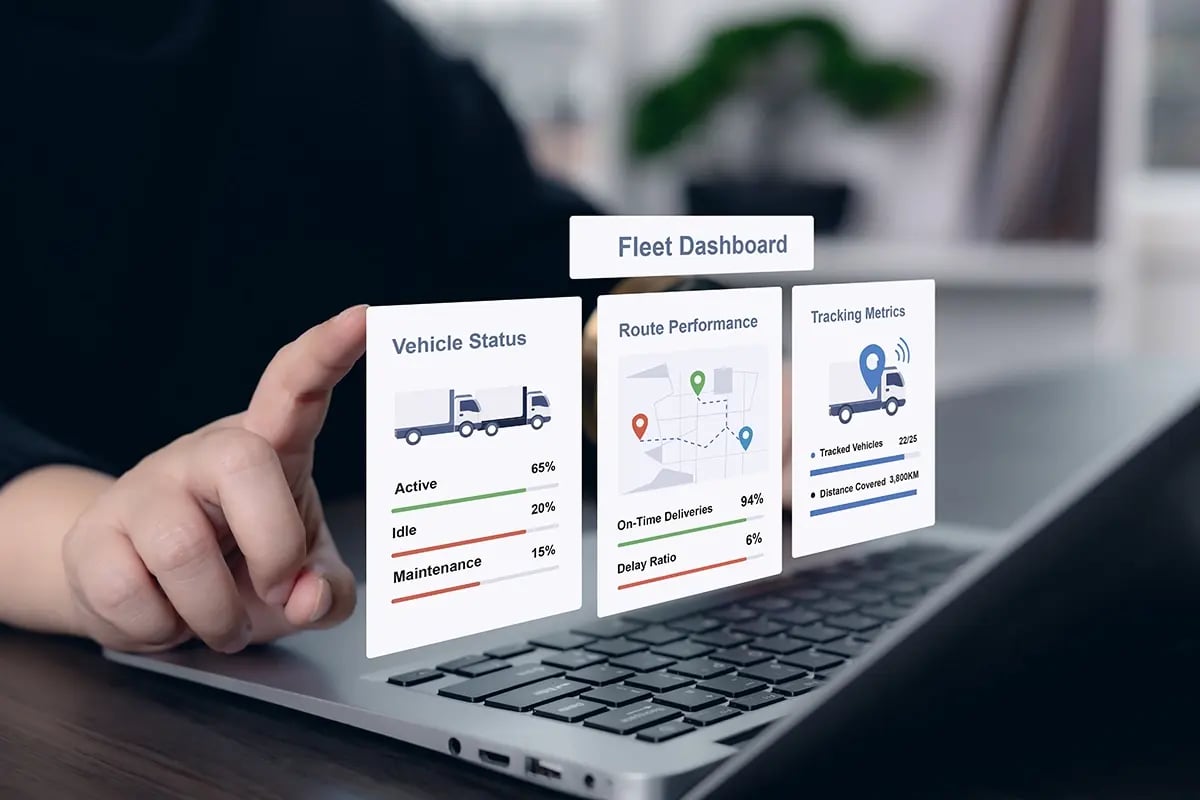
A Fleet Management System (FMS) helps logistics companies optimise vehicle performance, reduce operating costs, improve safety, and maximise asset uptime. Modern FMS platforms combine GPS tracking, telematics, predictive maintenance, compliance management, and analytics to provide complete fleet visibility. By integrating FMS with TMS and logistics platforms, businesses can connect vehicle health with transportation planning for smarter operations. For ANZ fleets, FMS helps manage compliance requirements, rising fuel costs, and complex long-distance operations.
Key Takeaways
- A Fleet Management System reduces operational costs by improving fuel efficiency, preventing unexpected breakdowns, optimising maintenance schedules, and reducing vehicle downtime.
- FMS improves fleet safety and compliance through driver behaviour monitoring, digital inspections, predictive maintenance, and support for ANZ heavy vehicle regulations.
- Modern FMS platforms provide real-time fleet visibility using GPS, IoT sensors, telematics, and analytics to monitor vehicle performance and asset utilisation.
- Integrating FMS with TMS creates a unified logistics ecosystem by connecting vehicle availability, maintenance status, route planning, delivery visibility, and customer service.
Is Your Fleet Bleeding Money? The Complete Guide to Fleet Management Systems (FMS)
Running a commercial fleet in Australia or New Zealand is tough. You have to deal with massive distances and strict rules every single day. You are constantly juggling fluctuating fuel prices and driver shortages. On top of that, the National Heavy Vehicle Regulator (NHVR) keeps the pressure high on compliance.
Simply tracking dots on a map won't cut it anymore. You need deep visibility into your operations to survive. Fleet management has moved far beyond basic GPS tracking. Today, it is about Asset Lifecycle Management. This approach focuses on squeezing every cent of value out of your truck before you retire it. You need to monitor the total cost of ownership and driver behaviour to ensure your entire fleet runs at peak efficiency.
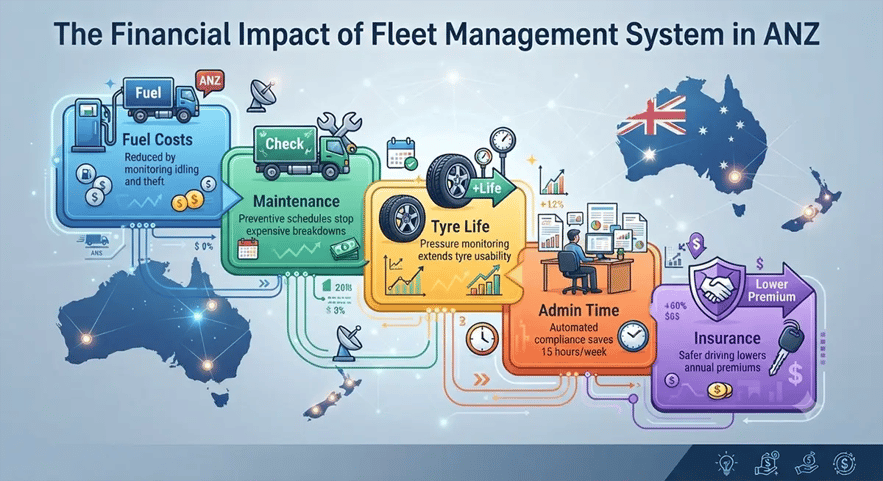
According to reports, fuel costs account for over 35% of total fleet budgets, creating a critical need for digital optimisation. Rising costs mean that reliance on manual spreadsheets is now a financial liability that erodes profit margins.
The solution is the implementation of a robust Fleet Management System (FMS) that acts as a profit-protection system for your business. By digitising your operations, you transform your fleet from a cost centre into a strategic asset that delivers value every day.
What is Fleet Management and Why Is It Critical for Logistics?
A Fleet Management System (FMS) is the software that manages the entire life of your vehicles. It handles everything from the day you buy a truck to daily operations, maintenance schedules, and eventual sale. This system gives you a single source of truth for every asset parked in your depot.
- The Black Box Problem: Many manual fleets operate in the dark regarding true costs because they lack real-time data integration. You cannot improve what you cannot measure. Without accurate data on fuel usage, it is impossible to identify where money is leaking from the business.
- Why Critical Now: In a low-margin industry, one major breakdown can easily wipe out the profit of an entire trip. Logistics software helps prevent these costly incidents by ensuring vehicles remain in peak condition. This protects your bottom line from unexpected repair bills.
- Asset Utilisation: Ensuring trucks aren't sitting idle is essential for maintaining profitability in a capital-intensive sector. An FMS visualises utilisation rates to help you decide whether to buy new trucks or simply get more work out of the existing fleet.
- Regional Relevance: Robust fleet and asset management solutions are vital for ANZ operators dealing with strict Chain of Responsibility (CoR) laws. You must prove your vehicles are safe to be on the road. Digital maintenance records provide the audit trail needed to demonstrate compliance during inspections.
What Are the Core Functions of a Fleet Management System?
A modern FMS delivers value by automating the hard work that keeps your fleet moving safely. These functions work together to give you complete visibility. They ensure no vehicle leaves your depot unless it is fully roadworthy.
- Telematics and Tracking: This goes beyond just seeing where your truck is. It analyses how the vehicle is being driven. Advanced logistics management software monitors speeding and harsh braking. You can use this data to correct unsafe habits before they cause an accident.
- Preventive Maintenance: You want to stop fixing breakdowns and start preventing them. By scheduling services based on live odometer readings, your system ensures maintenance happens at the perfect time. This saves you from catastrophic engine failures.
- Fuel Management: Connecting your FMS with fuel cards is the best way to catch theft. If a card is used at a service station but your truck GPS shows it was 50km away, the system flags it immediately for you to review.
- Compliance Management: Digitising logbooks and pre-start checklists ensures you never miss a thing. Automated compliance tools reduce your admin time significantly. This frees you up to focus on strategy instead of chasing paperwork.
How Does an FMS Improve Fleet Safety, Cost Per Kilometer, and Uptime?
Implementing a comprehensive transport management system module for fleet operations directly impacts several crucial pillars. When you rely on data to make decisions, you are able to reduce risk and operating costs at the same time.
- Safety and Driver Behaviour: Driver scorecards gamify safety by ranking your team based on their driving performance. When your drivers know you are monitoring harsh cornering, accident rates drop. This leads to lower insurance premiums and safer roads for everyone.
- Cost Per Kilometre (CPK): This is an extremely important metric for every fleet operator. An FMS tracks every tyre and repair against the distance travelled to give you the true CPK. This helps you understand which truck brands or models are generating the most profit for you.
- Predictive Impact: Fleets utilising advanced predictive maintenance have reported a reduction in unexpected breakdowns by up to 50% and equipment failure rates by up to 60%. This reliability is crucial for meeting tight delivery windows and maintaining customer trust in a competitive market.
- Maximising Uptime: Reducing Mean Time to Repair (MTTR) is essential for keeping assets generating revenue. When the system auto-orders parts before the truck even arrives for service, your mechanic can start work immediately. This gets your asset back on the road faster.
How Do You Integrate FMS with TMS and Delivery Visibility Tools?
An FMS manages the vehicle while a transportation management system manages the freight; connecting them is the key to efficiency. The silo problem occurs when these systems do not talk. This leads to disjointed workflows where dispatchers assign loads to trucks that are actually scheduled for maintenance.
- The Difference: It is essential to clarify the distinct roles of each system simply. FMS manages the Truck Health and Cost, while the transportation management software manages the Load Route and Cargo. Both are needed for a complete picture of your logistics operation.
- The Connected Workflow: Integration ensures seamless communication between the workshop and the dispatch team. The FMS tells the TMS that a truck is available. The TMS responds by scheduling maintenance based on upcoming trips to ensure zero downtime conflicts.
- Delivery Visibility: Combining GPS data from the FMS with order data from the TMS gives the end customer accurate ETAs. Transportation management solutions that leverage this integrated data can proactively alert customers to delays caused by vehicle issues. This improves overall service transparency.
How Are GPS, IoT, and Sensor Tech Driving Next-Gen Fleet Management?
The future of fleet management lies in moving beyond the engine to capture granular data from the entire vehicle. Logistics management system capabilities are expanding to include IoT sensors that monitor cargo temperature and tyre health in real time.
- Beyond the Engine: We are moving from standard telematics to granular sensors that monitor the entire asset. TMS software providers are now integrating data streams that track door openings alongside shock impacts. This provides a holistic view of trip performance.
- Tyre Pressure Monitoring Systems (TPMS): This technology is crucial for ANZ road trains traveling long distances in the heat. Detecting a slow leak before a blowout saves thousands in tyres. It also prevents catastrophic accidents that could ground the vehicle for days.
- Cold Chain IoT: Sensors that monitor the temperature of the reefer unit, independent of the truck cabin, are essential. This ensures that perishable food remains within safe temperature limits even if the driver turns off the truck engine.
- AI Dashcams: These cameras do not just record accidents; they actively prevent them. They use AI to wake a fatigued driver via eye tracking before an accident occurs. This provides a critical layer of safety for long-haul operations.
- Future Trend: The rise of EV Fleet Management features is gaining momentum as ANZ Logistics begins the transition. Tracking the state of charge will become standard as the industry slowly adopts electric heavy vehicles.
Why Ramco Logistics Software is the Choice for Asset-Heavy Fleets?
Managing an asset-heavy fleet requires a system that understands the complexity of maintenance alongside operations and finance. Ramco Logistics Software stands out by offering a unified platform that seamlessly integrates fleet management with broader logistics execution.
- The Unified Advantage: Most software vendors offer only FMS or only TMS which creates data silos. Ramco unifies them into a single platform. This ensures that your maintenance and dispatch teams are always viewing the same real-time data.
- Asset-to-Cash: Ramco tracks the asset from the moment you buy it until you sell it. This ‘Asset-to-Cash’ philosophy ensures you know the exact profitability of every vehicle. It helps you make smarter procurement decisions based on actual performance.
- AI-Driven Maintenance: Ramco leverages advanced AI to enable predictive maintenance. The system learns from historical data to optimise workshop schedules. This ensures that parts are available exactly when needed to minimise downtime.
- Regional Fit: Ramco is uniquely built to handle the complex requirements typical of the Australian mining and logistics sectors. It supports multi-trailer configurations and complex billing rules that local operators require to remain competitive.
Stop guessing your fleet costs and start managing them with precision. Discover how our fleet and asset management solutions can optimise your operations.

About Ramco Logistics Platform
Ramco Logistics Platform provides a cloud-based integrated solution tailor-made for third party logistics and express parcel service providers. The software helps to overcome key pain points, including supply shortages, limited resources, operational costs, the surge in demand and new compliance rules. The integrated solution encompasses transportation management system, warehouse management system, fleet & hub management and rating & billing. Trusted by over 25+ logistics companies worldwide, the platform is powered by NextGen AI & ML features that help logistics service providers reduce cost and acquire new customers.
Frequently Asked Questions (FAQs)
 What is a Fleet Management System (FMS)?
What are the benefits of a Fleet Management System?
How does fleet management software reduce operational costs?
How does FMS reduce fuel costs?
What are the key features of a Fleet Management System?
The key features of a modern Fleet Management System include:
- GPS vehicle tracking
- Telematics and vehicle monitoring
- Preventive and predictive maintenance
- Fuel management
- Driver behaviour monitoring
- Compliance management
- Digital inspections and checklists
- Asset lifecycle management
- Fleet analytics and reporting
These capabilities help businesses improve visibility, safety, and fleet performance.
How does predictive maintenance work in fleet management?
How does FMS improve fleet safety and compliance?
How do logistics companies track trucks in real time?
What is the difference between FMS and TMS?
A Fleet Management System (FMS) manages the vehicle, including maintenance, fuel, driver behaviour, compliance, and asset performance. A Transportation Management System (TMS) manages freight movement, including route planning, shipment execution, carrier management, and customer delivery visibility.
When integrated, FMS and TMS provide complete visibility across both vehicles and transportation operations.