Key Takeaways:
- Warehouse Management Software helps large warehouses improve productivity by managing operational complexity, increasing visibility, and reducing manual processes.
- Large-scale warehouse efficiency depends on real-time task orchestration, dynamic slotting, labor optimization, and intelligent workflows.
- WMS and TMS integration connects warehouse and transportation operations to improve coordination, reduce delays, and optimize outbound performance.
- Modern warehouse management systems enable 3PLs to scale efficiently through automation, smarter execution, and data-driven decision-making.
Bigger warehouses were supposed to make operations easier. More space, more capacity, more efficiency. That assumption still drives many expansion decisions today. But leaders running large distribution centers know the reality is different. Productivity does not automatically improve when square footage increases. In fact , sustaining operation efficiency becomes harder as facilities grow larger. The challenge is not size. The challenge is complexity.
As warehouses expand, operational decisions multiply faster than most systems can handle. Multi-client 3PL facilities managing hundreds of trucks, changing priorities, and continuous outbound pressure quickly discover that scale introduces a different kind of problem. Visibility reduces, coordination slows, and teams begin relying more on human intervention than system-driven execution. That is often the moment when productivity starts to flatten.
The conversation, then, should not be about warehouse size. It should be about how effectively operational complexity is managed, and whether the underlying warehouse management software is built to support that reality. For instance, 70% of supply chain executives plan to invest in automation to streamline operations.
How Large Warehouse Operations Change as Businesses Scale
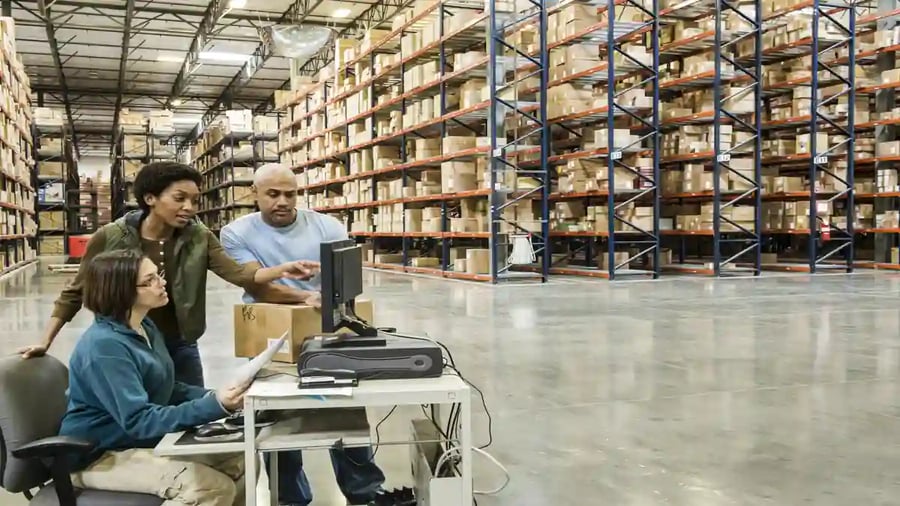
At a smaller scale, warehouse performance is often driven by process discipline and strong supervision. Large warehouses operate differently. Travel distances increase, staging zones compete for space, and dock coordination becomes more congested . A process that works smoothly in a 100,000 sq. ft facility can become inefficient in a 500,000 sq. ft environment simply because the variables multiply.
When systems cannot adjust quickly enough, supervisors step in to override task priorities, reshuffle labour, and manually manage workflows to keep things moving. This is a clear sign that operational logic is no longer scaling with business complexity.
Common Causes of Productivity Loss in Large Warehouse Operations
Large warehouses rarely experience one big failure. Instead, productivity declines gradually through small efficiencies l, almost invisible ways.
Static Slotting That No Longer Fits Reality
Slotting strategies often continue the structure designed during initial implementation. . But SKU velocity changes constantly. Customer demand shifts. High-velocity items move around the facility as business evolves. When slotting strategy remains static, travel time increases, picking efficiency decreases and labor productivity declines.
Modern warehouse management systems require dynamic slotting rules to evolve without major system changes or IT-heavy projects.
Fixed Wave Planning in a Variable Environment
Wave planning works well when operations are predictable. Large 3PL environments rarely operate under predictable condition . Carrier delays, last-minute order releases, and shift in client priorities can make a carefully planned wave irrelevant within hours. Teams then resorts to manual reprioritization.
Large facilities need execution systems capable of dynamically adjusting task sequencing and workload balancing in real time.
Warehouse and Transport Working in Isolation
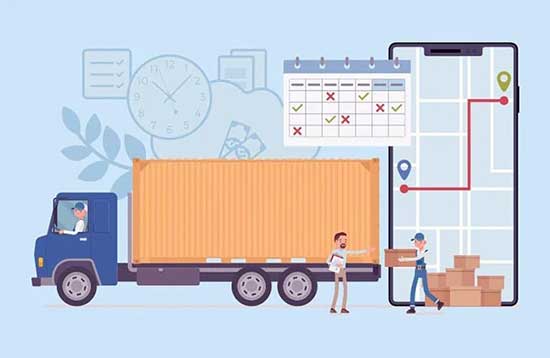
Another common friction point appears when warehouse execution and transport planning are disconnected. Orders are picked and staged efficiently, yet the outbound flow slows because dispatch schedules have changed. Without synchronization between WMS software and a transportation management system, warehouse efficiency does not translate into better logistics performance.
Why Large Warehouses Need System-Led Execution Instead of Manual Coordination
Experienced supervisors are essential in any warehouse operations. Their judgement keeps operations stable during uncertainty and demand spikes. But large-scale environments eventually exceed what even strong teams can coordinate manually.
When operations depend heavily on supervisor intervention:
- Priorities varies between shifts or teams
- Labor allocation becomes reactive
- Bottlenecks are solved only after they appear
- Decisions depend on individual experience
The goal is not to eliminate human decision-making but to elevate it
Large warehouses perform best when:
- Systems manage execution logic,
- while supervisors focus on exceptions, optimization, and strategic coordination.
What Large Warehouses Need from Modern Warehouse Management Software
High-performing large facilities share a defining characteristics. The system leads execution.
Task Orchestration That Adapts in Real Time
Advanced warehouse management software enables tasks to be dynamically assigned based on real-time operational conditions. Labor availability, zone congestion, and order urgency all influence what happens next. Capabilities such as Dynamics task interleaving, Zone-based picking and intelligent sequencing reduce unnecessary movement and help maintain throughput consistency even as conditions change.
Warehouse Execution That Understands Transport Reality
Warehouse operations do not exist in isolation. Dock scheduling and dispatch timelines need to reflect the same priorities. When WMS and TMS software work together natively, outbound flow becomes smoother. Orders move with transport schedules instead of waiting for them.
Decision Logic That Evolves with the Business
Large warehouses are never static. New clients onboard, SKU profiles shift, and demand patterns change quickly. A modern cloud-based warehouse management system allows operations teams to configure rules, flexible workflows changes with minimal IT dependency. . Real scalability comes from adaptable logic.
Benefits of Integrated WMS and TMS for Large 3PL Warehouse Operations
For large 3PL providers, productivity depends on end to end coordination across the entire logistics chain. Warehouse execution and transportation planning are deeply interconnected. Integrated 3PL WMS Software with transport capabilities creates a shared operational view that aligns decisions across warehousing and distribution.
This enables:
- Dynamic task allocation and zone-based picking
- Flexible slotting rules
- Dock scheduling aligned to dispatch timelines
- Real-time synchronization between warehouse and transport operations
- Better labour utilization
- Up to 60% cost reduction
Together, these capabilities position the warehouse as an intelligent part of a broader logistics management system.
Conclusion: The Future of Scalable Warehouse Operations
The future of warehouse performance will not be determined by how large facilities become. It will depend on how well complexity is managed. For COOs, Heads of Warehouse Operations, and CIOs, the strategic question is no longer about capacity alone. It is about whether decision-making can scale with operational complexity .
Organizations that move toward system-led orchestration and integrated execution are the ones that maintain productivity as operations become more complex. That is where modern warehouse management software makes the difference, helping large warehouses operate with clarity, control, and sustained performance even in highly complex environments.

 Why do large warehouses struggle with productivity as operations scale?