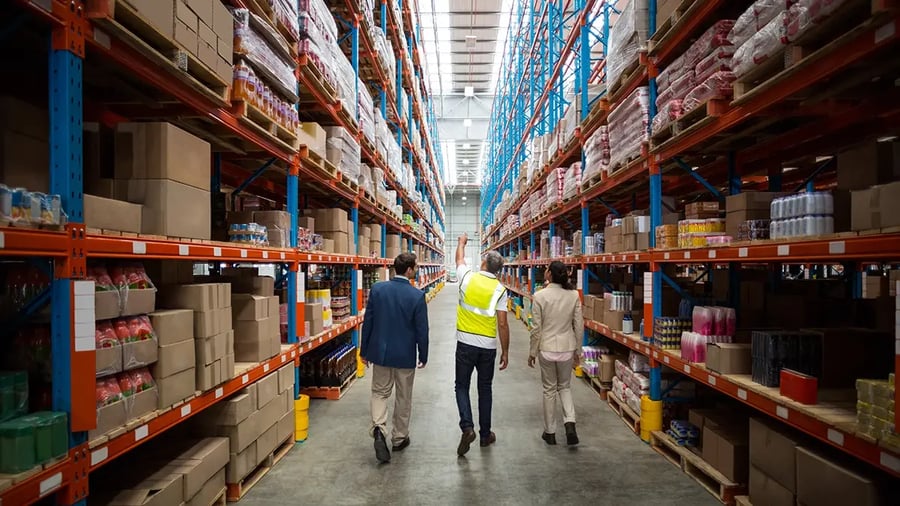
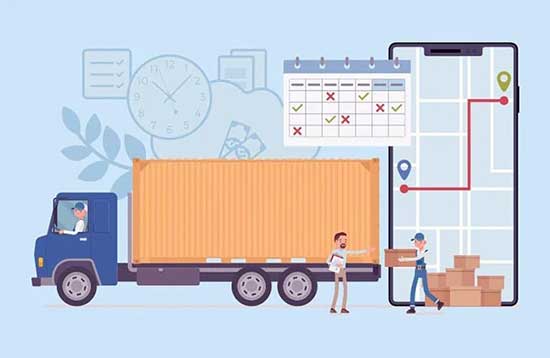
Multi-client warehousing is often presented as a strong margin model. Shared infrastructure, optimized space utilization, and diversified client portfolios should, in theory, create stable profitability for 3PL providers. On paper, many facilities appear healthy. Occupancy looks strong, utilization rates are high, and revenue targets are met. What appears profitable at an aggregate level often hides serious inefficiencies at the client level.
Some clients consistently erode margins despite paying standard rates. Others consume disproportionate operational effort without obvious visibility into cost impact. The problem is rarely space. It is an unmeasured activity.
In Australia alone, freight and logistics account for around 8.6% of GDP, highlighting how operational inefficiencies inside warehouses can materially affect overall profitability.. Traditional warehouse financial models were never designed to handle the operational complexity of modern multi-client environments. This is where modern warehouse management software plays a critical role, connecting operational activity directly to financial outcomes.
Why Multi-Client Warehousing Hides True Profitability and Causes Margin Leakage
Most warehouse financial reporting is done at the facility level. Revenue and costs balance across the facility, giving the impression of operational efficiency. The challenge arises when profitability is analysed on a client-by-client basis.
Not all clients contribute equally to profitability. They use the same physical space but demand very different levels of effort. Some require frequent partial picks, custom labelling, or high-touch handling. Others move inventory in predictable, low-complexity patterns. When costs are averaged across all clients, these differences disappear.
The result is a hidden cross-subsidy model in which efficient clients unknowingly absorb the costs of complex ones. Without visibility into activity-level cost drivers, finance teams struggle to understand where margins are leaking.
Why Space Utilization Fails to Represent True Warehouse Profitability in Multi-Tenant Operations
Space utilization remains one of the most common performance indicators in warehousing. High occupancy is often equated with profitability. Space utilization is only one dimension of warehouse cost.
Two clients occupying the same area of storage may generate completely different workloads. One may require frequent replenishment, mixed-SKU picking, and urgent dispatches, while the other may move in full pallets with minimal intervention.
From an operational perspective, the first client consumes more labour, more equipment movement, more supervision. Yet both are often charged using similar storage logic. This is why modern warehouse management systems increasingly focus on activity-complexity rather than static storage metrics.
How Operational Complexity Creates Uneven Cost-to-Serve Across Clients
Australia’s freight task continues to expand, with national freight volumes projected to grow significantly over the coming decades, increasing execution complexity across warehouse operations. Multi-client warehouses rarely operate under a single execution model. Each client introduces unique handling rules, service-level expectations, and workflow variations.
Examples include:
- Custom packaging or labelling requirements
- Different picking methodologies
- Variable order frequencies and batch sizes
- Client-specific compliance processes
These differences drive labour consumption and operating costs, yet many facilities absorb this complexity without financially measuring it .
A modern 3PL WMS Software approach allows client-wise handling rules to be defined and tracked at the operational level. Tracking operational effort provides a clear picture of how these activities translate into cost.
Why Static Rate Cards Fail in Modern Contract Logistics and Multi-Client Warehousing
Static rate cards were designed for predictable warehousing environments. Multi-client operations today are far more dynamic. When pricing models remain fixed while handling complexity changes, margin erosion becomes inevitable. Activities that were once occasional become more routine, but billing structures remain unchanged.
Integrated WMS software with rating and billing capabilities allows pricing to reflect actual activity. Instead of charging purely for space or fixed transactions, organizations can align billing with real operational effort. This shifts pricing conversations from assumptions to data-backed accuracy.
Why Finance and Operations See Different Versions of Warehouse Profitability
One of the most persistent challenges in large 3PL environments is the gap between operational data and financial reporting. Operations teams measure tasks, exceptions, and throughput. Finance teams measure revenue, cost centers, and profitability. When systems are disconnected, these perspectives rarely align.
The result is familiar:
- Finance questions rising costs without operational context
- Operations struggle to explain margin erosion
- Commercial teams lack accurate cost-to-serve data during negotiations
A connected logistics management system bridges this gap by linking warehouse transactions directly to cost and billing structures. This allows finance teams to understand not just what was billed, but what it actually costs to execute.
What a Cost-to-Serve Driven Multi-Client Warehousing Model Looks Like
Leading 3PL organizations are moving toward operational models where financial visibility is built into execution itself.
Key capabilities include:
-
Activity-Based Costing Through WMS Transactions
Every movement, pick, or handling step contributes to a clearer cost model. Activity-based costing creates transparency at the client level rather than relying on averages.
-
Client-Wise Handling Rules
Execution workflows can be configured by the client to ensure operational complexity is tracked accurately and reflected in costing.
-
Integrated Rating and Billing
When billing logic is integrated with operational activity, pricing aligns with actual effort, protecting margins as client requirements evolve.
-
Real-Time Cost-to-Serve Visibility
Finance and operations gain a shared view of profitability, enabling faster commercial decisions and more accurate client negotiations.
Together, these capabilities transform warehouse management software from an operational tool into a financial decision engine.
Conclusion: How Data-Driven Warehousing Eliminates Invisible Margin Leakage in 3PL Operations
The biggest financial risk in multi-client warehouses is not underutilized space. It is invisible operational effort.
CFOs and COOs who rely only on aggregate warehouse metrics may overlook where profitability is truly created or lost. The organizations gaining advantage today are those that accurately measure operational effort and service variability with the same precision they measure revenue.
When operational data connects directly to financial outcomes, pricing becomes more accurate, client profitability becomes transparent, and margin leakage becomes preventable.
Modern warehouse management solution platforms help 3PL providers move beyond broad utilization metrics toward true cost-to-serve clarity.
For finance and operations leaders, the question is no longer how full the warehouse is. Because in modern warehousing, profitability is no longer determined by how much space is occupied. It is determined by how well complexity is understood, measured, and monetized.
Explore how Ramco’s integrated warehouse management software helps multi-client warehouses connect execution with financial accuracy, and discover more insights through Ramco’s latest WMS-focused blogs.

 Why do multi-client warehouses lose margin despite high occupancy?