Over the past decade, logistics organizations have invested heavily in visibility. Dashboards, control towers, live tracking, and alert systems have become standard across most large 3PL operations. On the surface, it appears that operations are more transparent and more controlled than ever before. Yet one question still remains. If visibility has improved so significantly, why have operational outcomes not kept the same pace?
The reality is that visibility alone does not improve execution. In many organizations, real-time visibility has created an illusion of control rather than real operational change. Issues are identified faster, but action still depends on manual decisions, escalations, and human intervention.
This is where the gap becomes clear. Visibility shows what is happening, but it does not decide what should happen next. That difference lies in decision authority. Modern logistics management software must evolve beyond dashboards and alerts to systems that can support and enable decision-driven execution in real time.
How Dashboards Create an Illusion of Control in Logistics Management Software
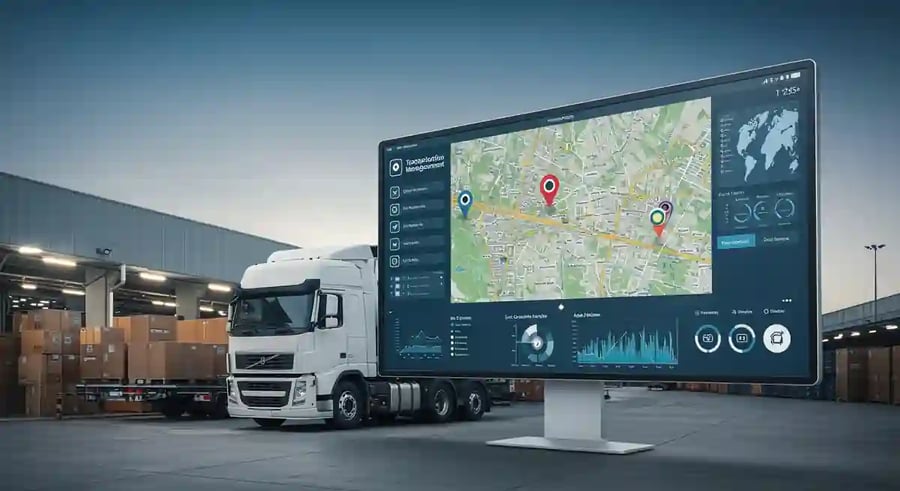
Dashboards promise clarity. They consolidate data, surface KPIs, and highlight issues across the supply chain. For CIOs and digital transformation leaders, they provide confidence that operations are being monitored. But dashboards rarely change what happens on the ground.
In many large logistics environments, teams spend significant time reviewing metrics, discussing alerts, and escalating issues. The visibility exists, but execution still depends on manual intervention. Decisions wait for meetings, approvals, or supervisor attention.
Operationally, this creates a gap between insight and action.
The problem with alert overload in logistics teams
As logistics networks grow more complex, alert volumes increase. Delayed shipments, dock congestion, labour shortages, and inventory mismatches all generate notifications designed to improve responsiveness. In practice, the opposite often happens.
Teams become overwhelmed by alerts. Critical issues compete with minor exceptions.Over time, people ignore or delay responses because too many decisions compete for attention.
This is a common pattern across organizations using transportation management system and warehouse management software environments where alerts rely entirely on human interpretation.
Why escalation-based decision-making breaks at scale
Many logistics organizations still rely on escalation-based models. An issue appears. A team member raises an alert. A supervisor reviews it. A decision is made. Execution resumes. This approach works when volumes are manageable. At enterprise scale, it creates friction.
Large 3PLs operate across multiple clients, facilities, and transport networks simultaneously. Exceptions are not rare events. They are continuous. Escalating each issue introduces delay, inconsistency, and operational variability. The result is a system that looks digitally advanced on paper but behaves manually in reality. A study found 38% of employees experienced crippling notification overload
Why decision-making needs to be built into logistics systems
Real transformation happens when systems are trusted to make decisions within defined boundaries. Decision authority should not sit entirely with people. It should be embedded into the logic of the logistics management system itself.
This does not mean removing human oversight. It means shifting humans toward strategic control while systems handle predictable operational decisions in real time.
Examples include:
- Automatically reassigning tasks when dock schedules change
- Reprioritizing shipments based on transport delays
- Triggering warehouse workflow adjustments when capacity thresholds are reached
When systems can act instead of simply alerting, operations move faster and remain consistent across shifts, locations, and teams.
From visibility to action in modern logistics operations
The next evolution of logistics software is not better dashboards. It is execution intelligence.
Modern platforms combine visibility with decision authority through capabilities such as:
-
Exception-Driven Workflows
Instead of sending alerts for every deviation, systems focus attention only on exceptions that truly require human review. Routine issues are handled automatically within predefined rules.
-
Rule-Based Thresholds That Trigger Action
Thresholds should initiate responses, not notifications. When delays, capacity limits, or service risks cross defined parameters, the system executes corrective steps without waiting for escalation.
-
Configurable Approval and Auto-Resolution
Operations teams maintain control through configurable workflows. Decisions can be auto-resolved where appropriate, while higher-risk scenarios follow approval paths aligned with governance requirements.
-
Unified Execution Across Warehouse and Transport
A connected execution layer across TMS software and WMS software ensures decisions made in one part of the operation immediately reflect across the network. Warehouse priorities align with transport realities, reducing friction between planning and execution.
What this shift means for CIOs and supply chain leaders
Digital transformation initiatives often begin with visibility because it is measurable and easy to justify. However, visibility alone rarely delivers sustained ROI. The organizations achieving real operational gains, in some cases achieving 5-20% reduction in logistics cost, are those that treat decision authority as a system capability. They move from monitoring operations to enabling systems that execute intelligently.
This shift changes the role of technology from reporting what happened to actively shaping what happens next. For CIOs and operations excellence teams, the question is no longer how much data is available. The real question is whether systems are empowered to act on that data.
Where logistics execution is heading next
The logistics industry does not lack visibility. Most large organizations already operate sophisticated dashboards and control towers.
What separates leaders now is decision-enabled execution.
When systems combine real-time insight with the authority to act, operations become faster, more consistent, and less dependent on constant human intervention. That is where modern Logistics ERP platforms and integrated execution systems deliver measurable value.
Conclusion:
Organizations looking to move beyond dashboard-led operations are increasingly adopting integrated logistics management software that unifies transport and warehouse execution into a single decision-driven layer.
Visibility shows you the problem. Decision authority solves it
Explore how Ramco’s logistics solutions help organizations shift from visibility to action, and discover more insights through Ramco’s latest logistics software blogs.

 Why is real-time visibility alone not enough in logistics operations?